

Garden Room Sedum Roof | Pros, Cons & Costs Explained
Everything you need to know about adding a sedum green roof to your garden room — including what it costs, what it involves structurally, and whether it is right for your build.
A sedum roof is one of the most striking things you can add to a garden room. It looks beautiful, sits naturally in a garden setting, and comes with a genuine list of practical benefits. It also adds cost and structural requirements that are worth understanding before you commit. This guide covers everything honestly, based on the builds we have completed across Surrey, Berkshire and Buckinghamshire.
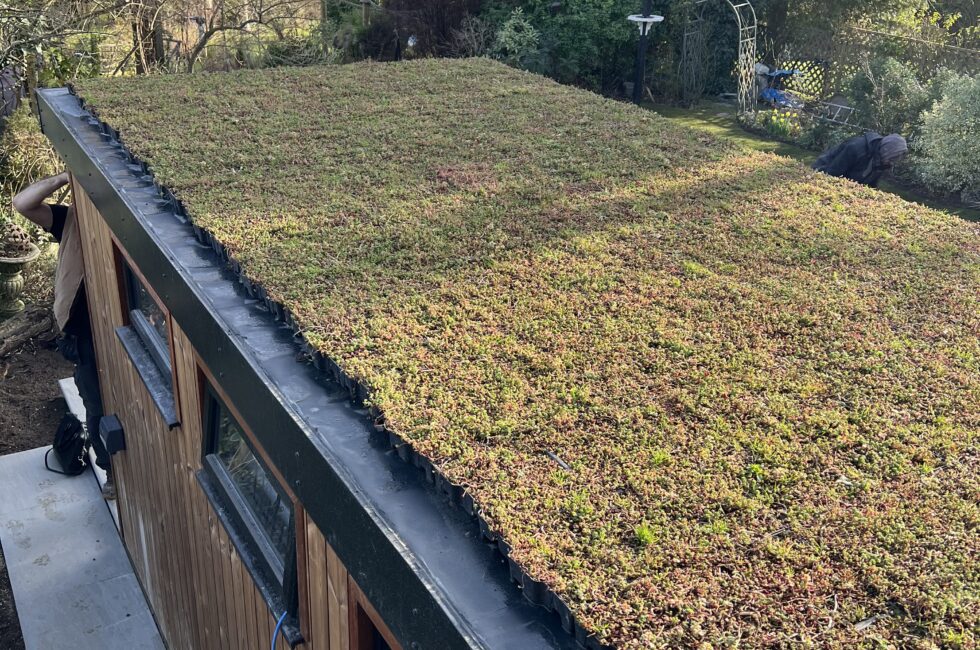
A sedum roof, also called a green roof or living roof, is a layer of low-growing succulent plants installed over a waterproofed flat or shallow-pitched roof. The plants grow in a thin layer of specialist substrate and are virtually self-maintaining once established. On a garden room, a sedum roof replaces or sits over a standard EPDM rubber or felt roof finish and transforms the appearance of the building from ground level and from above.
How Much Does a Sedum Roof Cost on a Garden Room?
The total cost of adding a sedum roof has two components: the structural upgrade to the roof timbers, and the sedum kit itself. These are separate costs and both depend on the size of the room.
| Component | What it involves | Indicative cost |
|---|---|---|
| Structural roof upgrade — smaller rooms | Roof timbers doubled up with closer spacing to carry the additional load of the sedum and substrate | From £500 |
| Structural roof upgrade — larger rooms | Steel added to the roof structure where timber alone is insufficient to carry the load | Up to £2,000 |
| Sedum roof kit (5m × 3m example) | Sedum mat or tray system, substrate, waterproofing layer and edging — supply and fit | From £1,500 |
Costs above are indicative and were correct at the time of publishing. The actual structural cost depends on the size of the room, the existing roof design and ground conditions. We assess this at the design stage before confirming any price. For customers who want to supply their own sedum kit, we recommend the Turf Online Enviromat flat roof kit, which comes with everything needed including the sedum mat, substrate and edging.
Want to know the exact cost for your garden room?
Design in 3D and get a price →The Pros and Cons of a Sedum Roof
These are drawn from builds we have completed and conversations with customers who have lived with their sedum roofs for several years.
Pros
- Visually stunning — looks exceptional from the garden and from upstairs windows
- Blends naturally into a garden setting in a way a rubber or felt roof never does
- Supports wildlife — bees, butterflies and other pollinators use sedum roofs heavily
- Improves insulation — the substrate layer adds thermal mass to the roof
- Reduces rainwater runoff by absorbing rainfall before it reaches drains
- Low maintenance once established — sedum is drought-tolerant and self-seeding
- Extends the life of the waterproofing membrane beneath by protecting it from UV and temperature extremes
- Changes colour through the seasons — greens, yellows, reds and oranges at different times of year
Cons
- Adds cost — both the sedum kit and the structural upgrade to carry the load
- Requires structural upgrade to the roof before installation — cannot be retrofitted to a standard roof without this
- Adds weight — sedum substrate when wet can weigh 60 to 120kg per m², which must be designed for
- Occasional weeding required in the first year while the sedum establishes
- Not suitable for steep pitches — works best on flat or very shallow roofs
- Access needed to inspect the roof periodically, which can be impractical on some plots
What the Structural Upgrade Actually Involves
This is the part most guides skip over, and it is the most important thing to understand before committing to a sedum roof. A standard garden room roof is designed to carry its own weight, snow loading and wind loading. Sedum substrate is heavy, particularly when wet. A 5m x 3m sedum roof can add between 900kg and 1,800kg of additional load to the roof structure depending on the depth of substrate used.
For smaller rooms, this is typically managed by doubling up the roof joists and reducing the spacing between them, which distributes the load more effectively across the structure. This adds from around £500 to the build cost. For larger rooms, timber alone is insufficient and steel needs to be introduced into the roof structure to carry the load safely. This can add up to £2,000 to the structural cost. We design the roof structure specifically for the sedum loading at the outset, rather than adapting a standard roof after the fact.
What a Sedum Roof Looks Like Through the Seasons
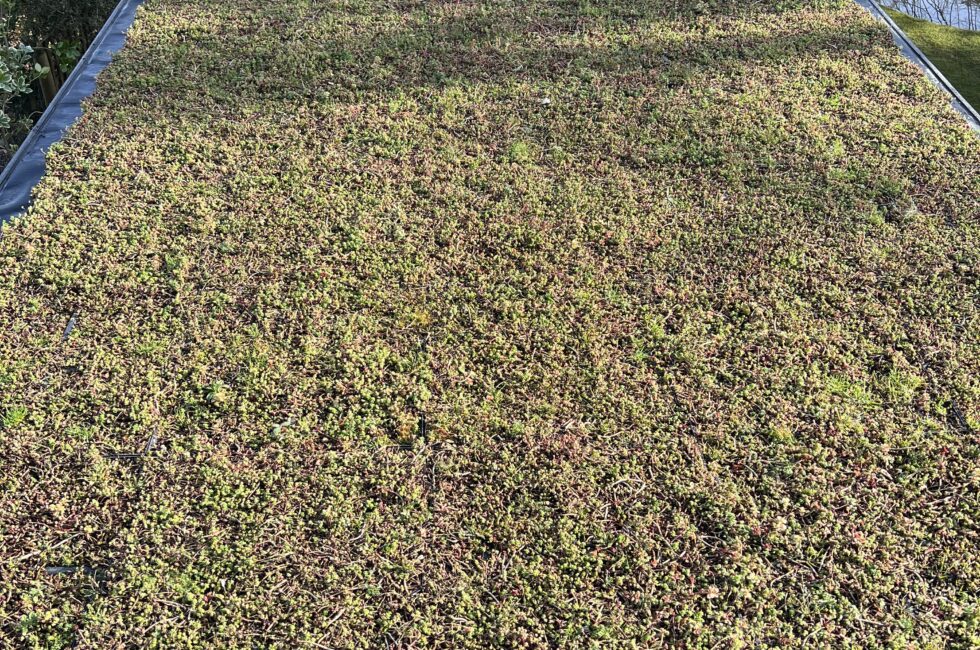
One of the things customers are sometimes surprised by is how much the appearance of a sedum roof changes through the year. It is not a static green carpet. In spring and early summer it is lush and vivid green, with flowers appearing across the mat. By late summer and into autumn, the tones shift towards reds, oranges and russets as the plants respond to the drier conditions. In a mild winter it retains much of its colour; in a cold snap it can look sparse before recovering strongly in spring.
This seasonal change is one of the reasons customers who have had sedum roofs for several years consistently rate it as one of the best decisions they made on their build. The roof becomes a feature of the garden in its own right — particularly appreciated from an upstairs window in the main house, which is often the primary viewpoint.
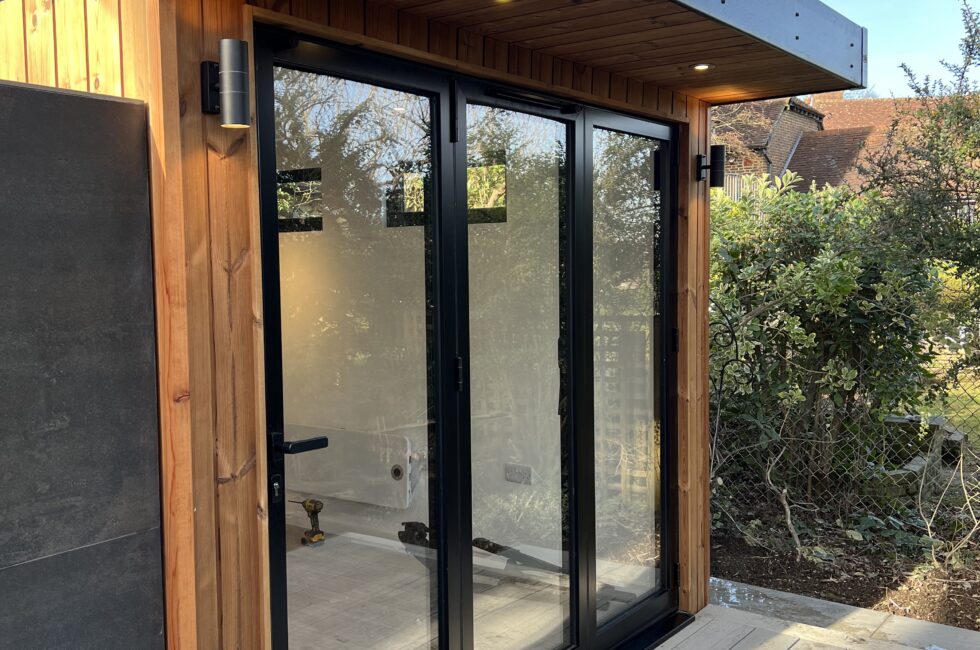
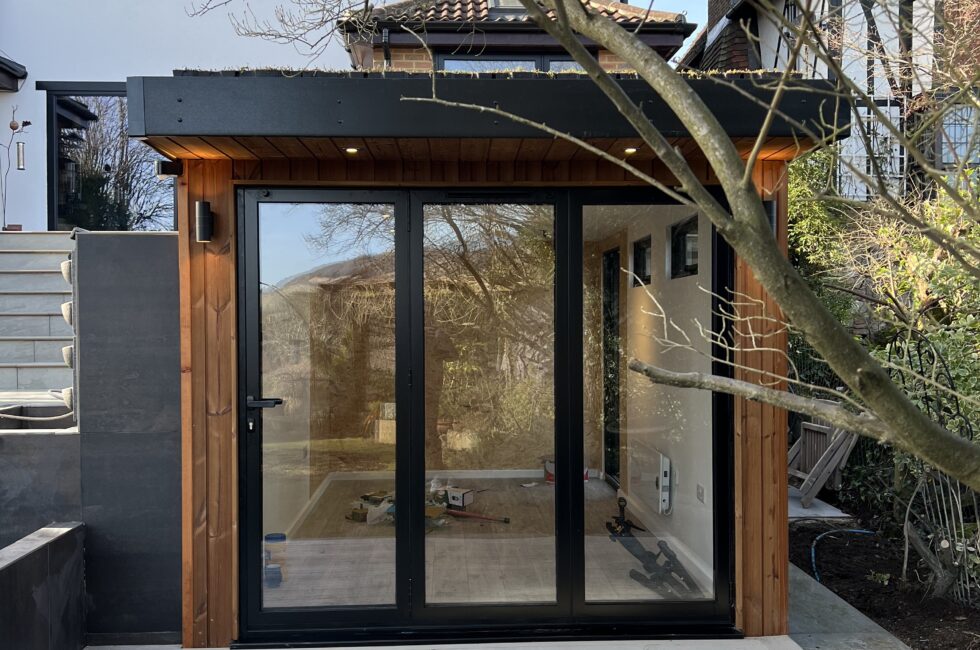
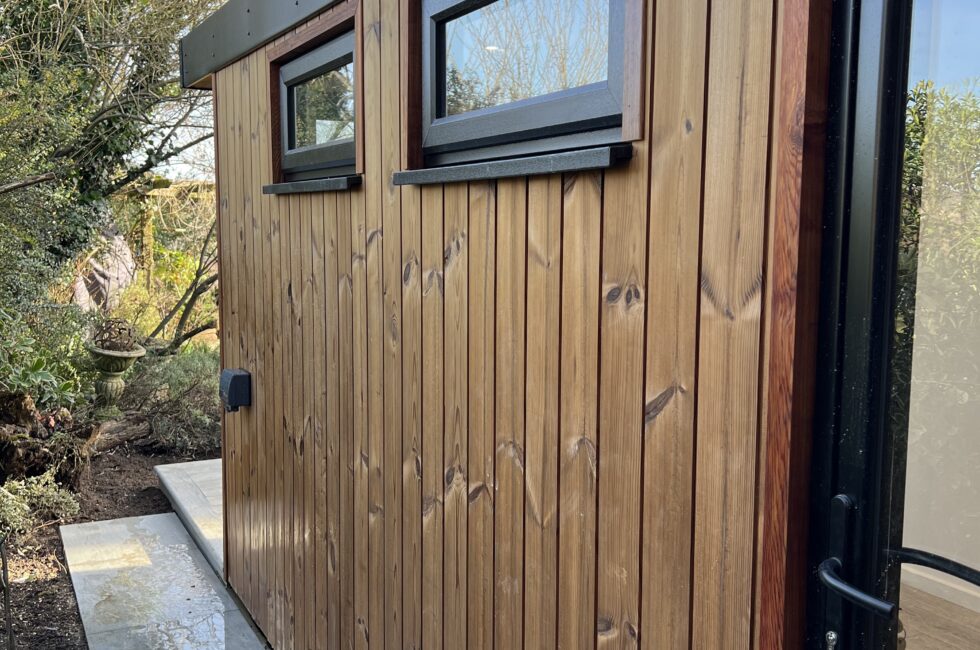
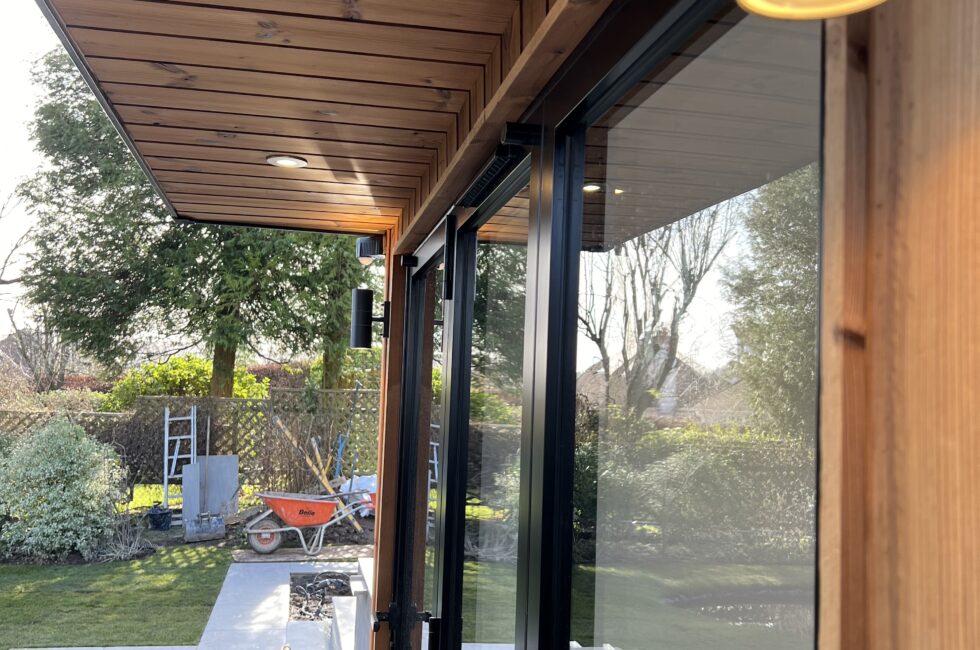
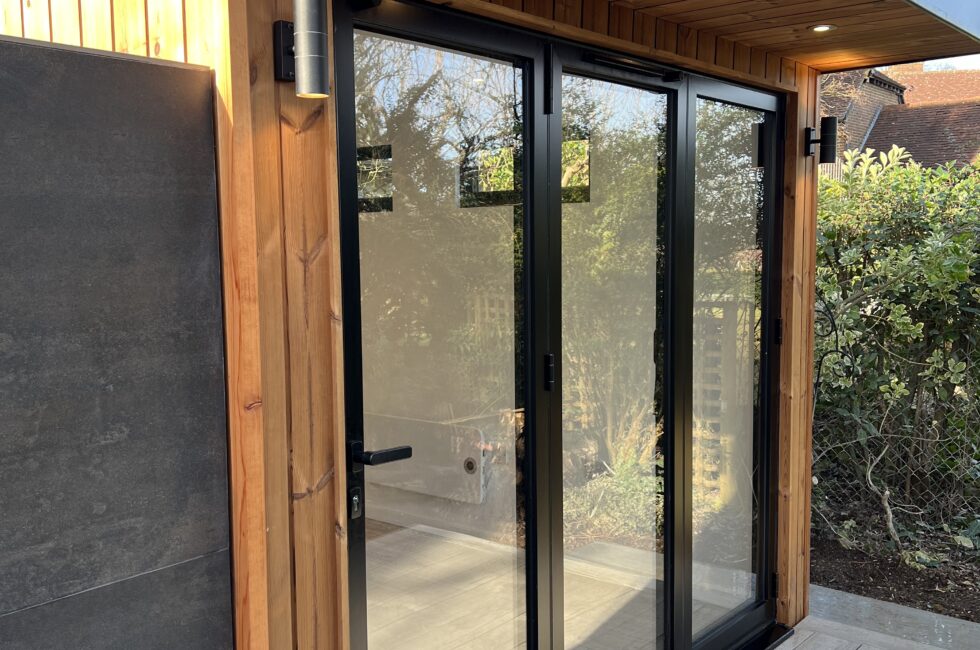
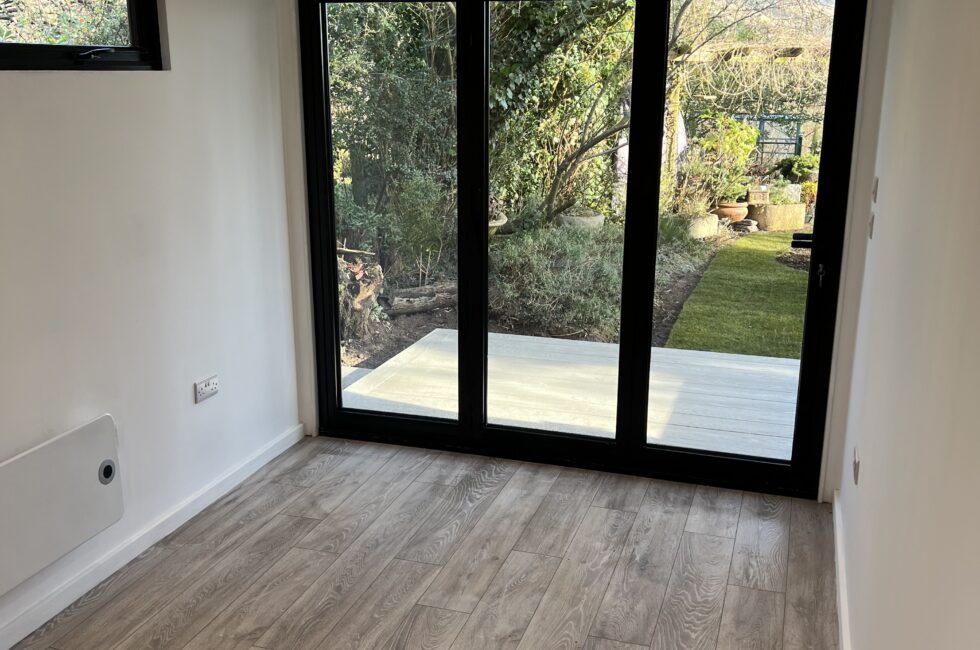
The images below show a completed My Retreat project in the Surrey Hills — a cycle workshop with thermally treated timber cladding, bifold doors and a living sedum roof. The sedum roof on this build is best appreciated from the main house above rather than from ground level, which is why it is not visible in these shots.
Interested in adding a sedum roof to your build?
Speak with Kieron →Maintenance: What to Expect
Sedum is one of the most low-maintenance plants you can grow. It is drought-tolerant, spreads naturally, and does not need feeding or watering once established in a proper substrate. The practical maintenance requirements on a garden room sedum roof are minimal but worth being honest about.
Year one
The sedum mat will establish over the first growing season. During this period, some weeds may appear in the substrate, particularly wind-blown seeds from the surrounding garden. These should be removed by hand before they become established. After the first full year, sedum will have spread to cover the substrate more fully and weeding requirements drop significantly.
Ongoing
Once established, a sedum roof needs very little attention. An occasional check to remove any persistent weeds and to ensure the drainage layer around the edges is clear is all that is realistically needed. Sedum does not need watering in the UK climate except during prolonged drought, and even then it will recover from apparent die-back once rain returns.
Access
The roof should be accessible for the occasional inspection of both the sedum and the waterproofing membrane beneath. On most plots this is straightforward. If your garden room will be in a position where the roof cannot be reached from a ladder, this is worth considering at the design stage.
Is a Sedum Roof Right for Your Garden Room?
The honest answer is that a sedum roof is not for everyone, but for the right customer it is one of the most satisfying decisions on a garden room build. Here is a straightforward way to think about it.
It is a good choice if…
You have a flat or very shallow roof, your garden room will be visible from an upstairs window or elevated position in the garden, you value the wildlife and environmental benefits, and you are happy to factor in the additional structural cost at the design stage.
It may not be the right choice if…
Your roof has a significant pitch, the room will be in a position where roof access is very difficult, or the additional cost is a concern at this stage. A good quality EPDM rubber roof will last 25 years or more and is perfectly good in its own right.
Frequently Asked Questions
How much does a sedum roof cost on a garden room?
What is a sedum roof?
Can a sedum roof be added to an existing garden room?
How much maintenance does a sedum roof need?
What are the benefits of a sedum roof on a garden room?
Does a sedum roof affect planning permission for a garden room?
What type of sedum is used on a garden room roof?
Helpful Pages
- Design your own garden room and get a price within one working day
- How much does a garden room cost? Our full price guide
- Do garden rooms need planning permission?
- What is the best base for a garden room?
- Best cladding for a garden room
- Insulated garden rooms: what is the best option?
- Garden office builds in Surrey
- Gallery — My Retreat garden room builds
- Turf Online — Enviromat sedum flat roof kit
Interested in Adding a Sedum Roof to Your Garden Room?
We design the roof structure for sedum loading from the outset and can talk you through the options at a free site visit. No pressure, no obligation.