

Best Cladding for a Garden Room | Timber, Composite & More Compared
Every cladding option explained honestly — cost, maintenance, durability and what each one actually looks like after five years.
Cladding is the first thing people see when they look at a garden room. It defines the character of the building, how much maintenance it will need, how it ages, and what it will look like in ten years. Getting this decision right matters, and there is a lot of advice online that focuses purely on first impressions without being honest about the long-term reality of each option.
We have fitted every type of cladding listed below on builds across Surrey, Berkshire and Buckinghamshire. This is an honest guide based on what we have seen in the field, not a brochure.
My top two recommendations are Cedar and Ecoscape composite slatted cladding — depending on the look you prefer. Cedar is a stunning natural timber that is hard to beat visually, though it does require oiling every 12 to 18 months to maintain its colour. Ecoscape is a beautiful contemporary composite that requires minimal upkeep and is a great choice if you want the modern slatted look without the maintenance commitment.
For a no-maintenance fibre cement option, Cedral or James Hardie are both excellent at a mid-range price — once fitted, you essentially never need to touch them. If budget is a priority, Thermowood is the most cost-effective option that still performs well outdoors, though like all natural timber it will silver off if not treated regularly.
If budget is not a constraint and you want the best composite money can buy, Millboard is outstanding. Redwood I would avoid for a permanent garden room — most companies will only guarantee it for five years, not ten.
Quick Comparison: All Cladding Options at a Glance
Supply costs per m² are indicative based on current market rates and were correct at the time of publishing. Installed costs will be higher depending on garden room size, profile, and labour. Prices are a guide only.
| Cladding type | Supply cost per m² | Maintenance | Durability | Rating |
|---|---|---|---|---|
| Millboard composite | £90 – £140+ | Very low — wash down only | Excellent | Premium low-maintenance |
| Ecoscape slatted composite | £55 – £100 | Very low — wash down only | Excellent | Top pick |
| Cedar | £32 – £70 | Oil every 12–18 months | Excellent | Top pick |
| James Hardie / Cedral (fibre cement) | £25 – £55 | Very low — occasional clean only | Excellent | No-maintenance fibre cement |
| Charred larch (Shou Sugi Ban) | £30 – £55 | Oil annually | Very good | Statement choice |
| Larch | £12 – £42 | Oil every 12–18 months | Good | Good mid-range |
| Thermowood | £30 – £50 | Oil every 12–18 months or silver naturally | Very good | Cost-effective |
| Redwood | £8 – £25 | Paint or oil regularly | Limited — 5yr guarantee only | Not recommended |
Want to see cladding options on your actual garden room design?
Try the 3D design tool →Thermowood
Thermowood is timber that has been heat-treated at very high temperatures rather than chemically treated. The process significantly reduces the moisture content of the wood, which is what causes standard timber to warp, shrink and split over time. The result is a more dimensionally stable board that performs considerably better outdoors than untreated larch or redwood.
It has a deep, warm brown tone when new. Like all natural timber, it will silver off over time if not oiled. Some customers love the silvered look; others prefer to maintain the original colour with an annual treatment. Either is a valid choice, but it is worth deciding upfront as reversing a silvered finish is not straightforward.
Pros
- Significantly reduced warping, shrinking and splitting vs larch or redwood
- Better durability and decay resistance than untreated timber
- Heat-treated rather than chemically treated
- Mid-range price — more affordable than cedar or composite
- Natural, warm appearance
Cons
- Will silver off without oiling every 12–18 months
- Very dark tone can feel heavy on large sections without enough glazing to break it up
- Still requires a maintenance commitment
James Hardie Fibre Cement Cladding
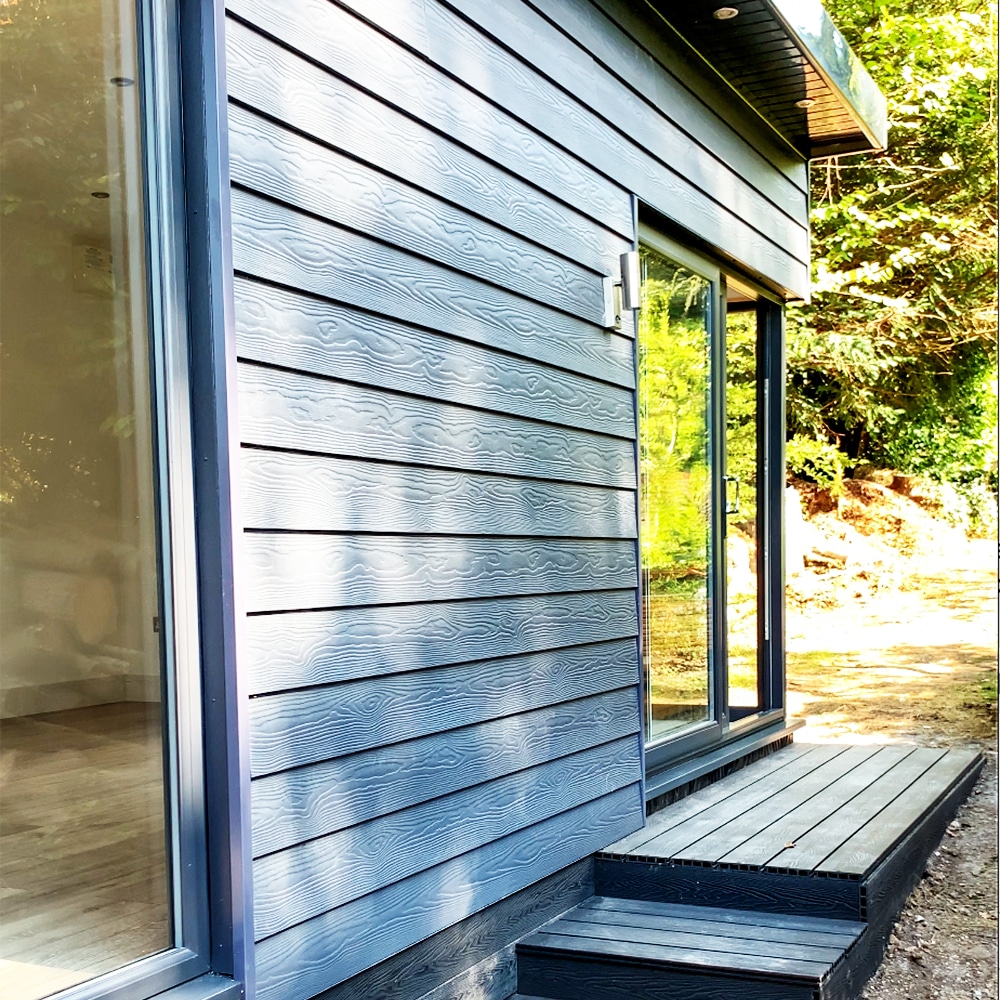
James Hardie and Cedral are both fibre cement board products that look like timber cladding but are made from cement, sand and cellulose fibres. They do not rot, do not burn, are resistant to moisture and pests, and come pre-finished in a wide range of colours. They are the cladding of choice for customers who want a beautiful finish and genuinely never want to think about upkeep.
The main practical consideration is that it cannot be clad in the factory like timber, as the panels would be too heavy to transport pre-fitted. It has to be cut and fitted on site, and the cut ends need to be painted after cutting. This makes it more labour-intensive to install, which is reflected in the price.
Pros
- Extremely low maintenance — occasional clean is all it needs
- Resistant to fire, moisture and pests
- Will outlast natural timber cladding significantly
- Available in 20+ colours and finishes
- No oiling, staining or repainting required
Cons
- Labour-intensive on-site installation adds to cost
- Higher environmental impact than natural timber
- Less natural in appearance up close
- Cut ends must be painted on site after installation
Cedar
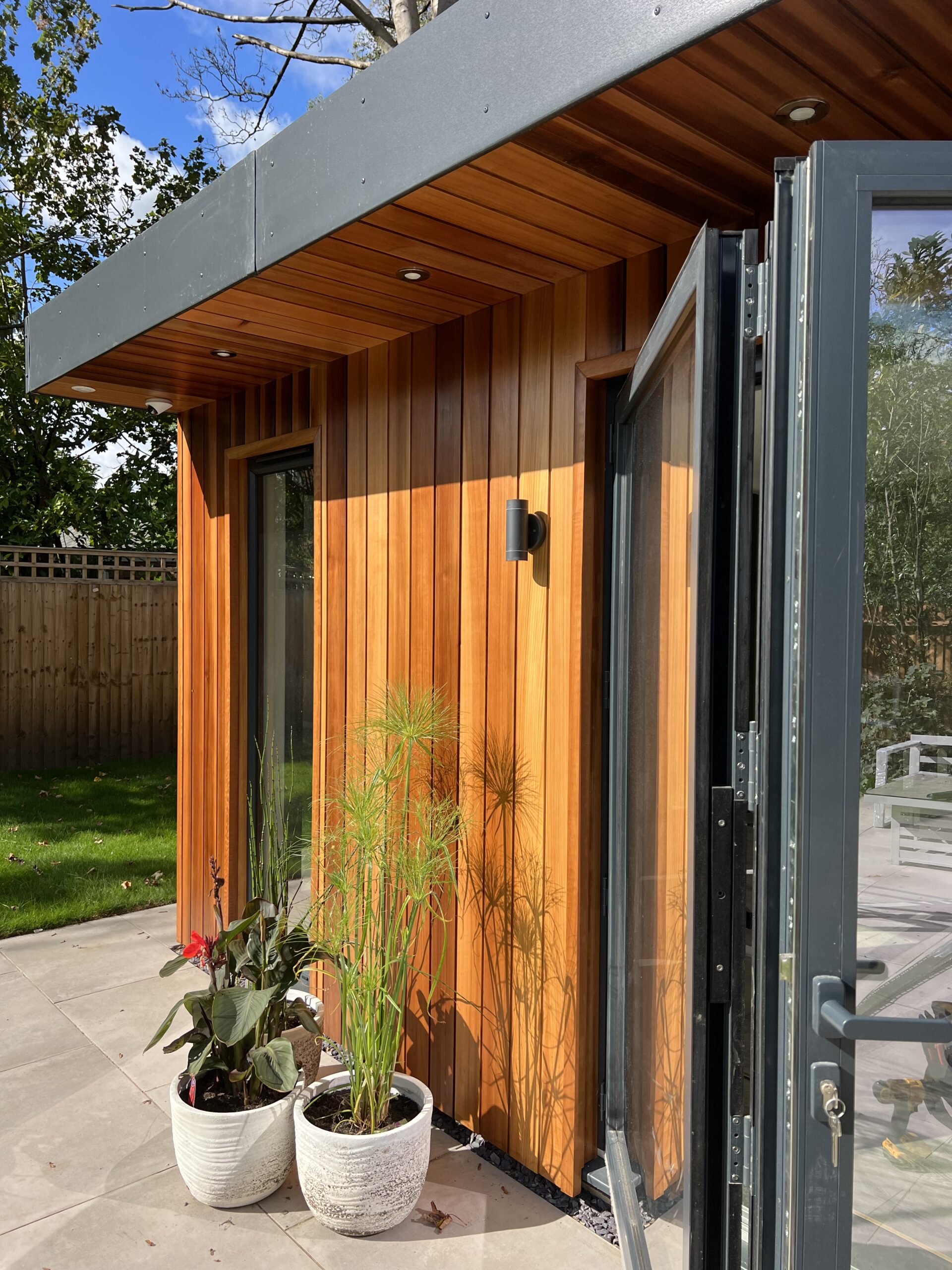
Western red cedar is the premium natural timber choice. Its distinctive warm orange-red tone, natural oils that resist decay and insects, and the way it ages make it the most visually impressive natural timber cladding available. It is the most expensive natural timber option, but for customers who want the finest-looking natural build, nothing else quite matches it.
Pros
- Distinctive rich orange-red tones when new
- Naturally resistant to decay and insects
- Renewable resource with low carbon footprint
- Ages beautifully with proper maintenance
Cons
- Highest cost of the natural timber options
- Requires oiling every 12–18 months
- Will silver off without treatment like all natural timbers
Ecoscape Slatted Composite Cladding
Ecoscape is a composite slatted cladding made from 55% reclaimed wood fibres and 45% recycled HDPE plastic. It gives a striking, contemporary slatted appearance that looks particularly impressive against anthracite grey doors and windows. It carries a 25-year warranty, will not rot, warp, split or fade significantly, and needs nothing more than an occasional wash down to keep it looking good.
Available in six colours from light oak and silver birch through to darker charcoal and argent tones, and installable horizontally or vertically. If you want a modern, design-led look without a long-term maintenance commitment, this is the composite option Kieron would put first.
Pros
- Contemporary slatted appearance — very distinctive look
- Made from 55% reclaimed wood fibres — ethically sourced
- Will not rot, warp, fade or splinter
- 25-year warranty
- Very low maintenance — wash down only
- Available in 6 colours, horizontal or vertical
Cons
- Higher cost than most natural timber options
- Contemporary slatted look is not to everyone's taste
- Not identical to natural timber up close
More information at ecoscape.co.uk
Larch
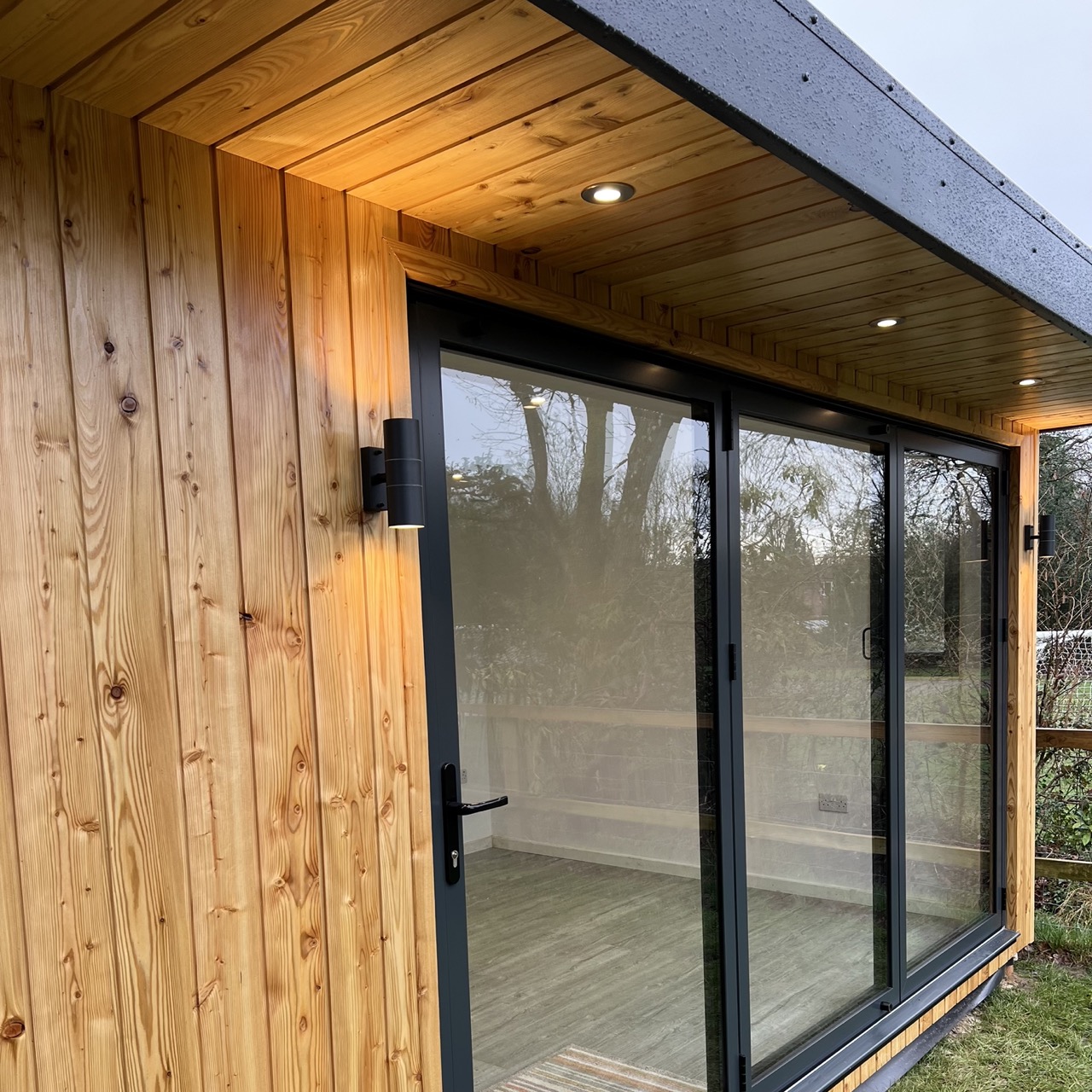
Larch is one of the most widely used cladding timbers for garden rooms in the UK. It is tougher and more dimensionally stable than redwood, with a warm honey tone when new. Left untreated, it silvers off to a pale grey. Some customers deliberately choose this look; others maintain the original warm tone with regular oiling. Both are valid choices, but decide upfront as reversing a silvered finish is not straightforward.
Pros
- Tougher and more stable than redwood
- Warm honey tone when new
- Ages to a pleasant silver-grey if left untreated
- More cost-effective than cedar or composite
Cons
- Will shrink and expand seasonally — some movement is normal
- Requires oiling every 12–18 months to maintain colour
- Less dimensionally stable than thermowood
Charred Larch (Shou Sugi Ban)
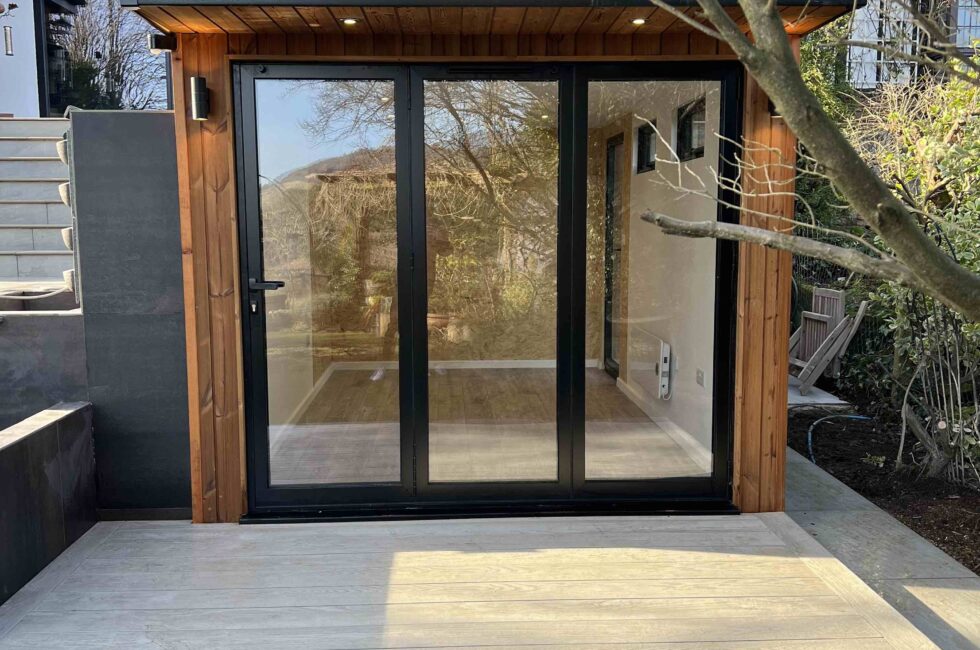
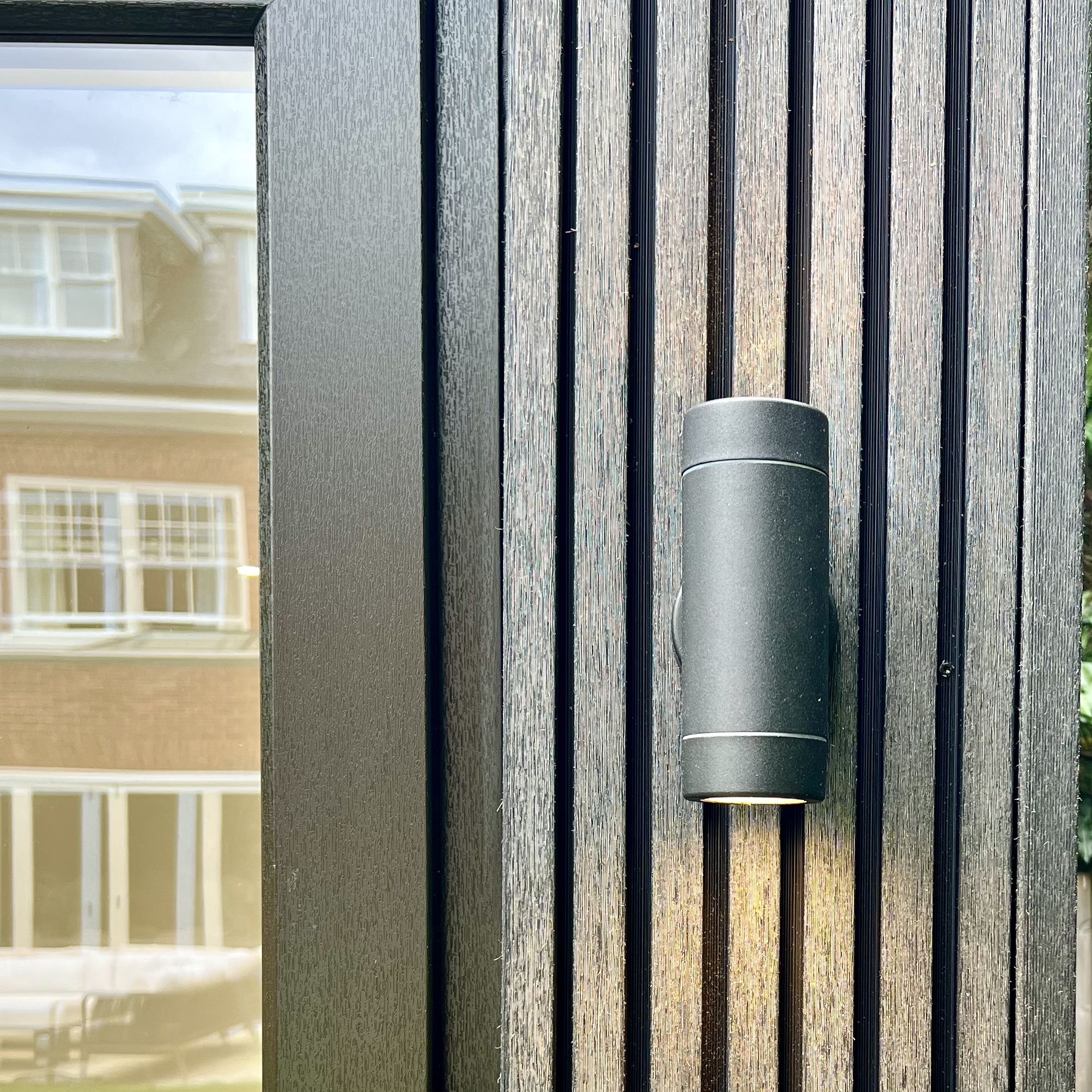
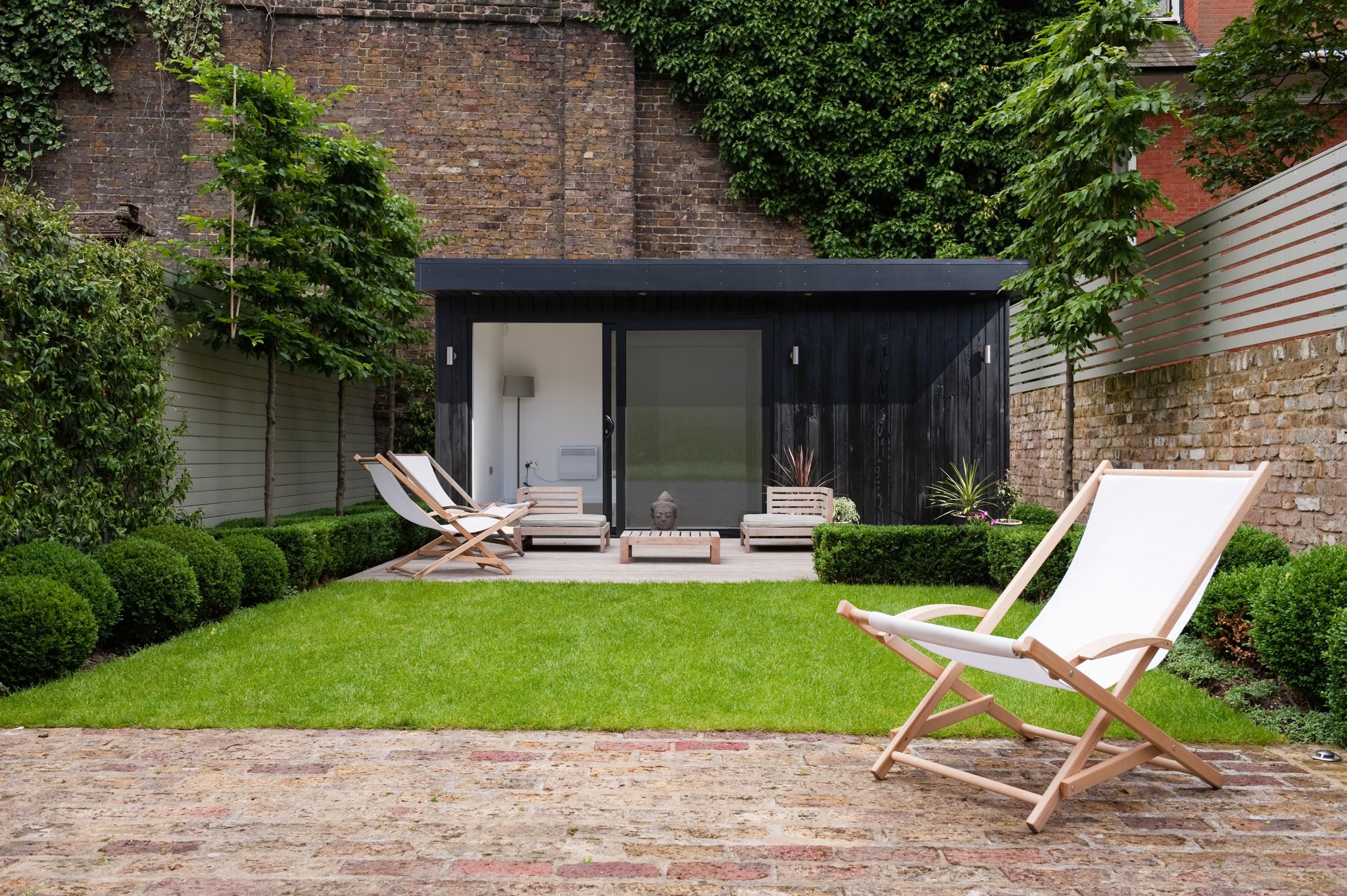
Shou Sugi Ban is a Japanese technique of charring the surface of timber to create a deeply textured, near-black finish. The charring hardens the surface, making it more resistant to pests, rot and fire than untreated timber. It is a bold, architectural choice that looks particularly striking with anthracite grey doors and contemporary glazing.
Any cuts made on site expose raw timber underneath, which needs to be charred after cutting to maintain consistency. This makes installation more involved than standard timber cladding and is reflected in the cost.
Pros
- Unique, dramatic appearance unlike anything else
- Charred surface is more resistant to pests, rot and fire
- Lower ongoing maintenance than untreated timber
- Works beautifully with contemporary door and window styles
Cons
- Higher initial cost than standard larch
- Cut ends must be charred on site after installation
- Still requires oiling annually
- A definite statement choice — not to everyone's taste
Not sure which cladding suits your garden and design?
Ask Kieron directly →Millboard Composite Cladding
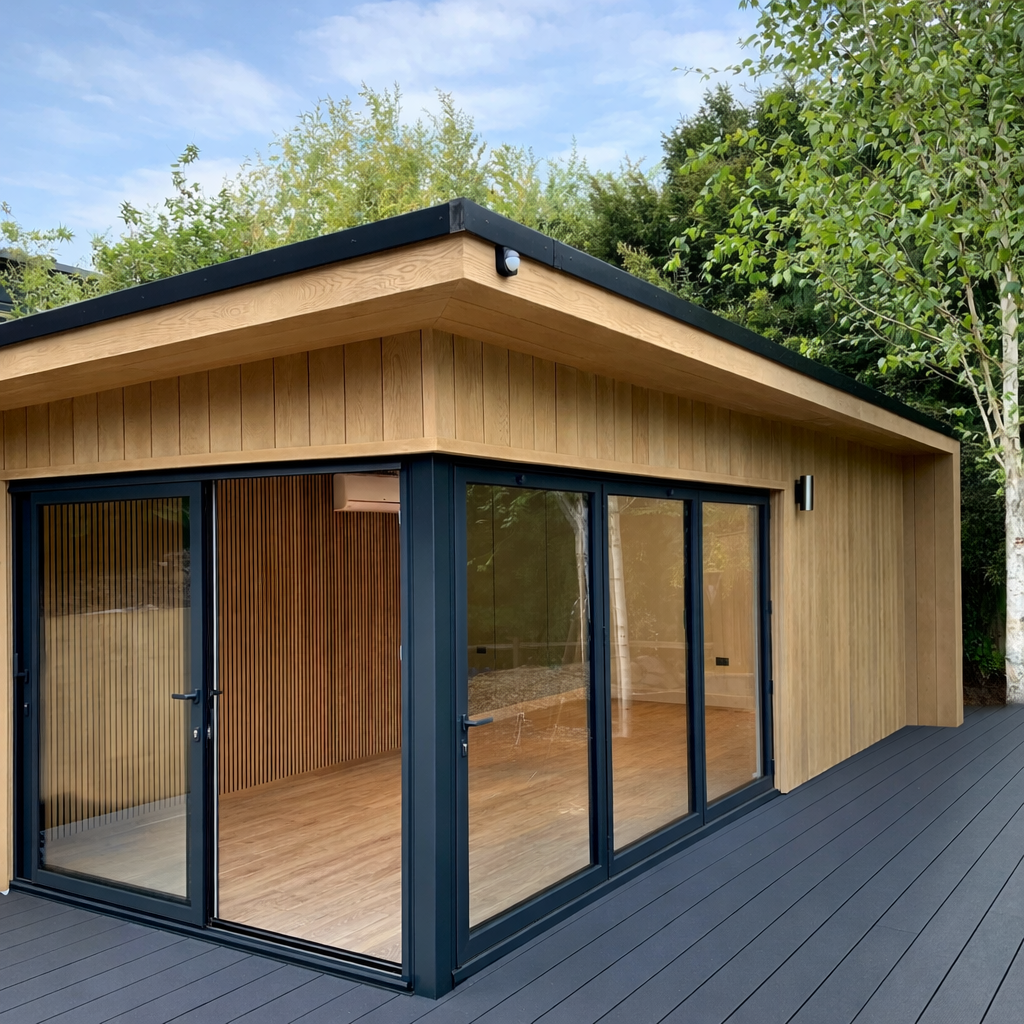
Millboard is a composite cladding made from polyurethane resin and mineral stone, moulded to replicate the grain and texture of real timber. It is the most realistic-looking composite cladding on the market. A good example is our 7.5m x 4m build with Millboard Envello Shadow Line in Golden Oak, which creates a striking warm contrast against anthracite grey aluminium sliding and bifold doors.
Pros
- Virtually no maintenance — occasional wash down only
- Highly realistic timber appearance
- Excellent long-term durability
- Will not rot, warp or fade significantly
- Available in multiple colours and profiles
Cons
- Highest cost of all cladding options
- Not real timber — very close up close but not identical
- Higher environmental impact than natural timber
Redwood
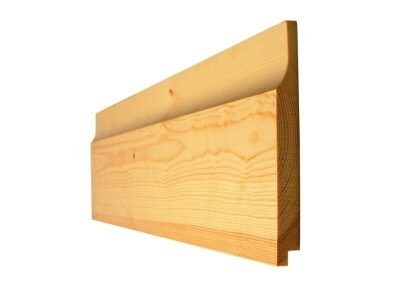
Redwood is the most affordable cladding option and is widely used at the lower end of the market. It has a pale golden tone when new and takes paint well. However, it is a softwood with real durability limitations that are worth understanding before committing to it.
Most garden room companies offering a 10-year structural guarantee will only guarantee redwood cladding for five years. If you are buying a garden room and the company offers a 10-year guarantee that includes redwood cladding, ask exactly what the cladding element of that guarantee actually covers.
Pros
- Lowest cost cladding option
- Takes paint well — good for a painted finish
- Renewable resource and widely available
Cons
- Softwood — prone to twisting, warping and splitting
- Most companies guarantee for 5 years only, not 10
- Requires regular painting or oiling to prevent deterioration
- Not recommended for a permanent, year-round garden room
Frequently Asked Questions
Helpful Pages
- Design your own garden room and get an instant price
- How much does a garden room cost? Our full price guide
- What is the best base for a garden room?
- Insulated garden rooms: what is the best option?
- Do garden rooms need planning permission?
- Garden office builds in Surrey
- Garden room gym builds in Surrey
- Gallery — My Retreat garden room builds
Not Sure Which Cladding Is Right for You?
We carry samples of every cladding option and can talk you through the choices at a free site visit. No pressure, no obligation.