

Steel vs Timber Garden Rooms: Which Structure Is Actually Better?
If you’ve started researching garden rooms, you’ve probably come across two common claims.
Some companies say timber is best because it’s natural and well-insulated.
Others claim steel frames are superior because they are stronger and longer-lasting.
So which is actually better?
The honest answer is that both materials have advantages, and the best garden rooms often combine the strengths of each rather than choosing one over the other.
In this guide, we explain the real differences between steel frame garden rooms, traditional timber garden rooms, and the hybrid approach used by many high-quality modern builds.
Why the Structure of a Garden Room Matters
Before comparing materials, it’s important to understand why the structure matters in the first place.
A well-built garden room should:
- Stay structurally stable for decades
- Remain warm and comfortable all year round
- Resist moisture and ground movement
- Support insulation, cladding and glazing properly
- Require minimal maintenance over time
The materials used in the floor, walls and roof all contribute to these outcomes.
Fully Timber Garden Room Construction
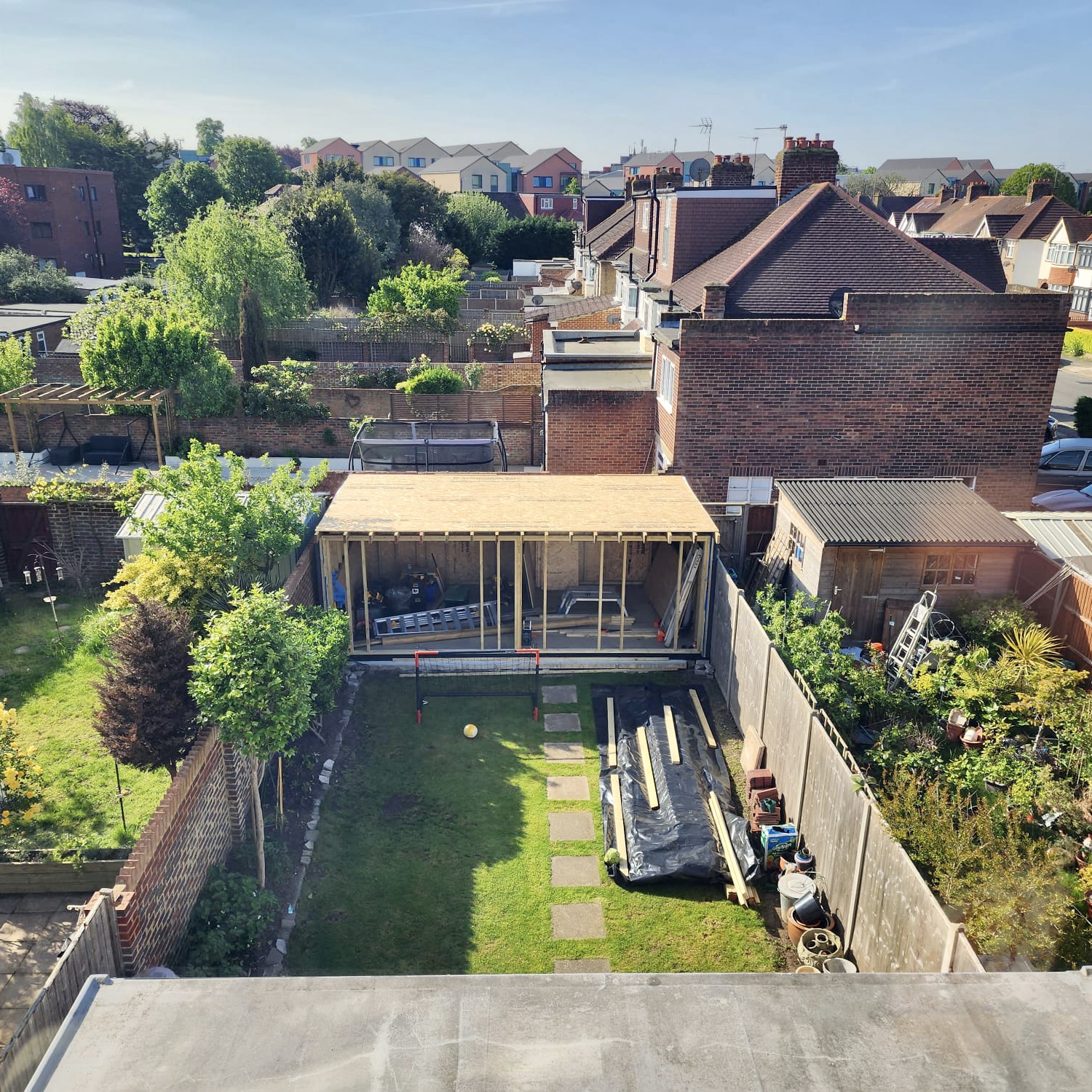
Traditional garden rooms are typically built using timber framing, similar to modern house construction.
The walls and roof are constructed from timber studs, filled with insulation, then finished internally with plasterboard and externally with cladding.
Advantages of Timber Construction
Excellent insulation performance – Timber is a natural insulator, which helps reduce thermal bridging and improves the energy efficiency of the room.
Flexible during construction – Timber framing is easy to modify on site, making it easier to adapt designs if adjustments are needed.
Easy to attach finishes – Cladding, plasterboard, electrics and shelving can all be easily fixed to timber structures.
Lower initial cost – Timber structures are usually more cost-effective to build than fully steel systems.
Potential Downsides
Timber is a natural material, which means it can:
- Expand and contract slightly with humidity
- Require adequate protection from moisture (hence garden rooms are encased in a breather membrane and fitted with a layer of cladding
- Be more susceptible to long-term movement if poorly built
That said, modern treated structural timber lasts decades when properly constructed and protected.
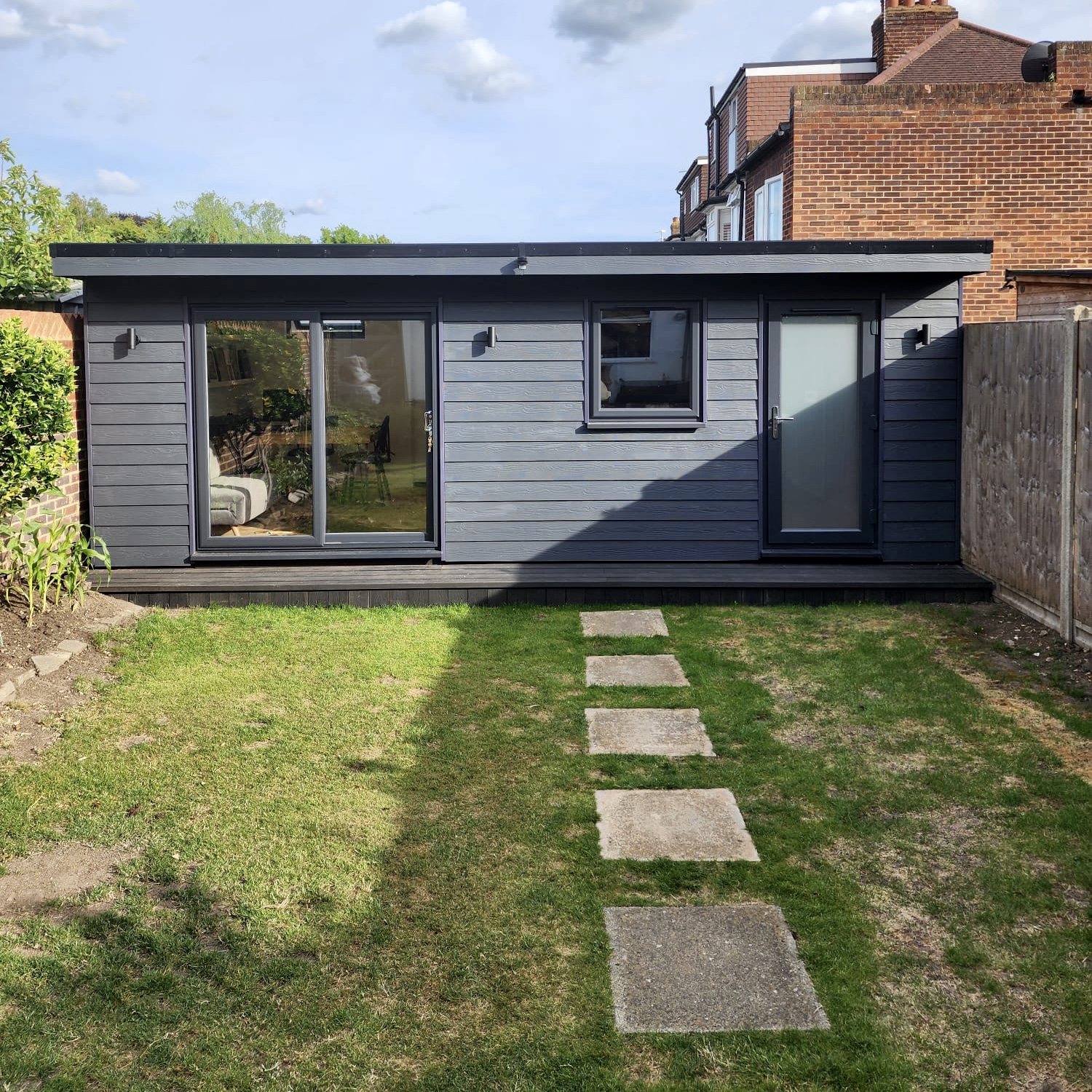
Fully Steel Frame Garden Rooms
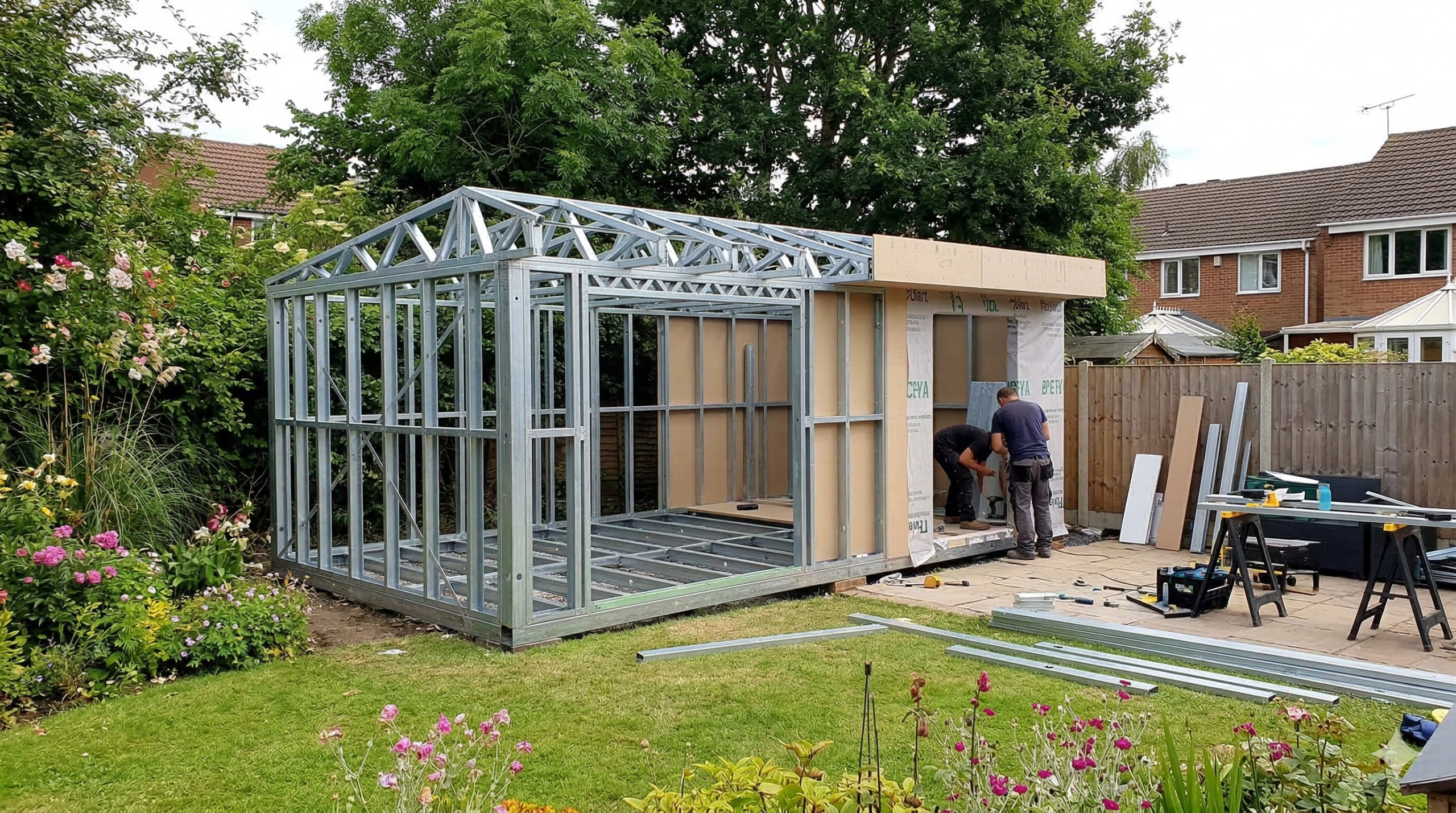 Illustration of a steel frame garden room showing the structural frame before insulation and cladding are installed.
These systems are often manufactured in factories and assembled on site.
Advantages of Steel Frames
Exceptional structural strength – Steel is extremely strong and rigid, which means it will not warp, twist or shrink.
Long lifespan – Steel does not rot or suffer from insect damage.
Precision manufacturing – Steel frames are usually produced with computer-controlled machinery if done, ensuring very accurate dimensions.
Good for large spans – Steel can support larger openings or heavy glazing more easily.
Potential Downsides
Thermal bridging – Steel conducts heat far more than timber. If not designed carefully, this can reduce insulation performance.
Higher cost – Fully steel-framed systems are typically more expensive.
Less flexible during installation – Changes on site are harder to make compared with timber framing.
Extra fixing systems required – Many finishes still necessitate the use of secondary battens or fixings attached to the steel frame. Installing shelves and similar items can be challenging due to the absence of stud walls.
The Hybrid Approach: Steel Floor with Timber Walls
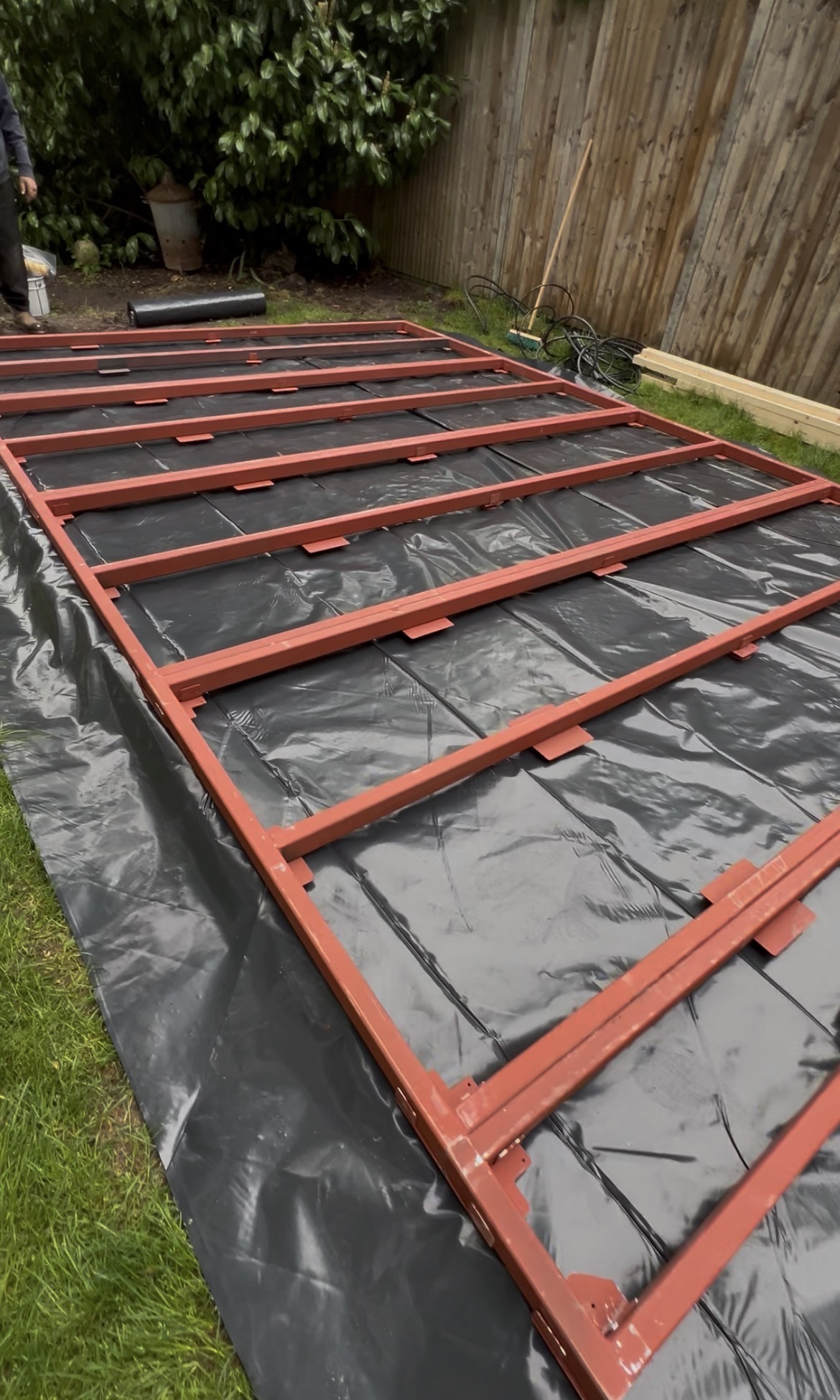
Many high-quality garden room builders now use a hybrid construction method.
This combines a steel frame floor system with timber-framed walls and roof.
This approach focuses on using each material where it performs best.
Why Use Steel for the Floor?
The floor is the part of the building most exposed to:
- Ground moisture
- Damp conditions
- Ground movement over time
A steel frame floor provides:
- Exceptional rigidity
- Long-term durability
- Resistance to rot and moisture
- A perfectly level and stable base
Why Use Timber for the Walls and Roof?
Timber works extremely well above the floor because it provides:
- Excellent thermal performance
- Easier installation and modification
- Simple fixing for cladding and internal finishes
- Cost efficiency compared with full steel systems
The result is a structure that combines strength, warmth and practicality.
Which Garden Room Structure Is Best?
For most residential garden rooms, a hybrid system offers the best balance of performance and practicality.
It provides:
- A strong and durable base
- Excellent insulation performance
- Efficient construction
- Long-term stability
Fully steel structures can be useful in certain commercial or modular applications, but for most garden room installations, the hybrid system provides the ideal combination of strength, insulation and cost effectiveness.
Why We Use a Steel Frame Floor at My Retreat Garden Rooms
At My Retreat Garden Rooms, we use a steel frame floor system combined with highly insulated timber walls and roof.
This allows us to deliver garden rooms that are:
- Warm and comfortable all year round
- Structurally robust and long-lasting
- Highly insulated and energy efficient
- Built with precision and durability
By combining the strengths of both materials, we create garden rooms that feel like a genuine extension of your home rather than a garden building.
Thinking About Adding a Garden Room?
If you’re considering a garden room and want to understand the best options for your space, we’d be happy to help.
Call us to explore how our structures are built.
Your perfect garden room might be closer than you think.
FAQs & Helpful Pages:
-
Design a 3D garden room for free and get a price within one working day
-
Go to the Planning Portal to read more on Building Regulations
-
Go to the Planning Portal to find out more about Planning Permission and find your Local Authority